

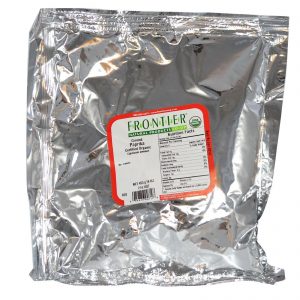


- Capsicum Annuum
- USDA Organic
- Kosher
- Certified Organic by QAI
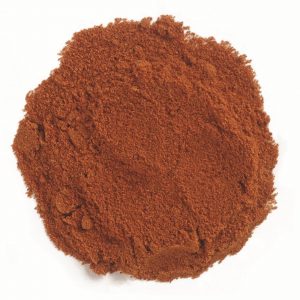
A sweet but sassy relative of the chili pepper, paprika is used to add warm, natural color and mildly spicy flavor to soups, stews, grains, and a variety of hors d’oeuvres.
Also known as sweet red pepper or pimento pepper, the paprika (Capsicum annuum) is larger and much milder than the chili pepper. An herbaceous annual that grows 20 to 60 inches in height, it’s sometimes woody on the bottom, with leaves that are dark green on top and lighter underneath. The flowers are white and the fruit starts out green, then turns red, brown, or purple; the red fruit is harvested for paprika.
Domestic paprika has a fresh, green quality, while the Spanish variety is more pungent and the Hungarian is more lively. Spanish and Hungarian paprikas have become more alike, though, as the Hungarian peppers are now bred to taste more like the sweeter Spanish peppers. They still look different, though; Hungarian and domestic peppers are more pointed, while those from Spain are smaller and rounder. Hotter paprikas are now often obtained by adding cayenne to the powder to punch up the heat.
Paprika is graded according to classes: Spanish paprika has three grades (sweet, semi-sweet, and hot), while Hungarian has seven (or more) classes (special quality delicate, exquisite delicate, pungent exquisite delicate, rose, noble sweet, half-sweet, and hot). By the way, the brightest red peppers aren’t the hottest. In fact, the lighter red and lighter brown are hotter than the bright varieties. For mildest flavor, choose the Spanish variety; for a bit more pizzazz, go Hungarian. While there’s some debate about just how it happened, the first pepper plants (which were stronger than the paprikas we know today) are thought to have been brought to Hungary (famous for its paprika) in the 17th century. In the 19th century, during a contest to determine the best ground paprika, two Hungarian brothers introduced a milder version of paprika by removing the stalks and seeds from the peppers. These parts of the pepper are higher in the heat-producing capsaicin. A Nobel Prize (1937) has even been given to a scientist for his vitamin C research on paprika peppers. Paprika peppers have seven times more vitamin C than oranges, pound for pound.
Uso Sugerido
A páprica libera seu sabor e cor quando aquecida. Também queima facilmente e quando começa a ficar marrom, seu sabor fica mais amargo. Por isso, cuidado para não cozinhar por muito tempo (em uma frigideira, por exemplo).
Perfumadamente doce e colorida, a páprica é um ótimo tempero para ter à mão. Use-a para adicionar uma bela cor e uma doçura levemente pungente a qualquer prato. Experimente-a em queijos, molhos, aperitivos, saladas, pratos com ovos, marinados e alimentos defumados. Adicione-a à farinha usada para empanar aves, carnes bovinas e frutos do mar e inclua-a em temperos de saladas, nos quais ela adicionará cor e funcionará como um emulsificante (para combinar o óleo e o vinagre). Sopas, ensopados e caçarolas portuguesas, turcas e espanholas contam com a páprica, bem como o frango tandoori indiano. A páprica é tradicionalmente usada em salsichas temperadas, carnes processadas, paprikash e goulash húngaros. E você a encontrará em misturas em pó com chili.
Advertências
Não irradiadas
Nossa Loja se esforça para garantir a atualização das imagens e informações dos produtos, algumas alterações na fabricação de embalagens e / ou ingredientes podem estar pendentes na atualização do nosso site. Embora os itens possam ocasionalmente ser enviados com embalagens alternativas, o frescor é sempre garantido. Recomendamos que você leia os rótulos, avisos e instruções de todos os produtos antes de usá-los e não dependa apenas das informações fornecidas pelo Nossa Loja.
| Informação Nutricional | ||
| Tamanho da dose: 1/4 colher de chá (0,6 g) | ||
| Quantidade por porção | % Valor diário* | |
| Calorias | 0 | |
| Calorias da gordura | 0 | |
| Gordura total | 0 g | 0% |
| Gordura saturada | 0 g | 0% |
| Gordura trans | 0 g | |
| Colesterol | 0 mg | 0% |
| Sódio | 0 mg | 0% |
| Carboidrato total | 0 g | 0% |
| Fibra dietética | 0 g | 0% |
| Açucar | 0 g | |
| Proteína | 0 g | |
| Vitamina A | 6% | |
| Vitamina C | 0% | |
| Cálcio | 0% | |
| Ferro | 0% | |
| * A porcentagem de valores diários baseia-se em uma dieta de 2.000 calorias. | ||
Você também pode gostar:
- Frontier Natural Products, Pimenta Preta Fina Moída Orgânica, 16 oz (453 g)
- Frontier Natural Products, Erva Stevia Orgânica em Pó, 16 oz (453 g)
- YumEarth, Organic Hard Candies, Assorted Flavors, 80 oz (2268 g)
- Walden Farms, Manteiga de Maçã, 12 oz (340 g)
- Nature’s Way, Óleo de Coco Líquido Premium, 300 ml (10 fl oz)
- Xyloburst, Balas de Xilitol, Balas de Frutas, 6,35 oz (180 g), 300 Unidades
- Starwest Botanicals, Chá Verde Chunmee Orgânico, 453,6 g (1 lb)
- Organic Coffee Co., Zen Blend, Ground, 12 oz (340 g)
- Now Foods, Estévia Líquido Adoçante, Romã e Blueberry, 2 fl oz (60 ml)
- Twinings, Chá de Ervas para Relaxamento, Passiflora e Camomila, Maçã com Especiarias e Baunilha, Sem Cafeína, 18 Saquinhos, 27 g
- Raw Rev, Glo, Massa de Brownie de Chocolate Duplo, 12 Barras, 1,6 oz (46 g) Cada
- Epic Bar, Gordura de Pato Tradicional, 11 oz (312 g)
- Pukka Herbs, Matcha verde purificador, 20 sachês de chá verde, 0,05 oz (1,5 g) cada
- Pukka Herbs, Orgânico de Groselha Embelezadora, Sem Cafeína, 20 Saquinhos de Chá de Frutas, 38 g (1,34 oz)
- Almondina, Almond Bites, Ginger Turmeric Almond, 5 oz (142 g)
- Mt. Whitney Coffee Roasters, Organic Ethiopia Guji, Medium Roast, Ground Coffee, 12 oz (340 g)
- Rishi Tea, Organic Loose Leaf Green Tea, Jasmine Pearls, 3 oz (85 g)
- Teeccino, Organic Roasted Herbal Tea, French Roast, Dark Roast, Caffeine Free, 25 Tea Bags, 5.3 oz (150 g)
- Source Naturals, Equilíbrio de Cristal, Sal do Himalaia, Moído Fino, 340 g (12 oz)
- B-Fresh , Chiclete para Refrescar o Hálito, Bubble Gum, 50 Unidades